
As we begin 2026, many investors are understandably feeling optimistic. Markets have delivered a remarkable winning streak over the past three years, rewarding patience and long‑term discipline. That kind of consistency is welcome—but it also brings with it an important question:
What comes next?
A Look Back: A Strong Run for Markets
Over the past three years, markets have moved steadily higher, overcoming inflation pressures, rising interest rates, geopolitical uncertainty, and frequent predictions of downturns. Despite these challenges, diversified investors who remained disciplined were rewarded.
This period reinforces a timeless lesson:
Markets can climb a wall of worry longer than most expect.
Wall Street’s View for 2026
Looking ahead, many major Wall Street forecasts expect the market’s momentum to continue into 2026. As illustrated in the chart below, expectations across firms are generally positive—but not extreme.
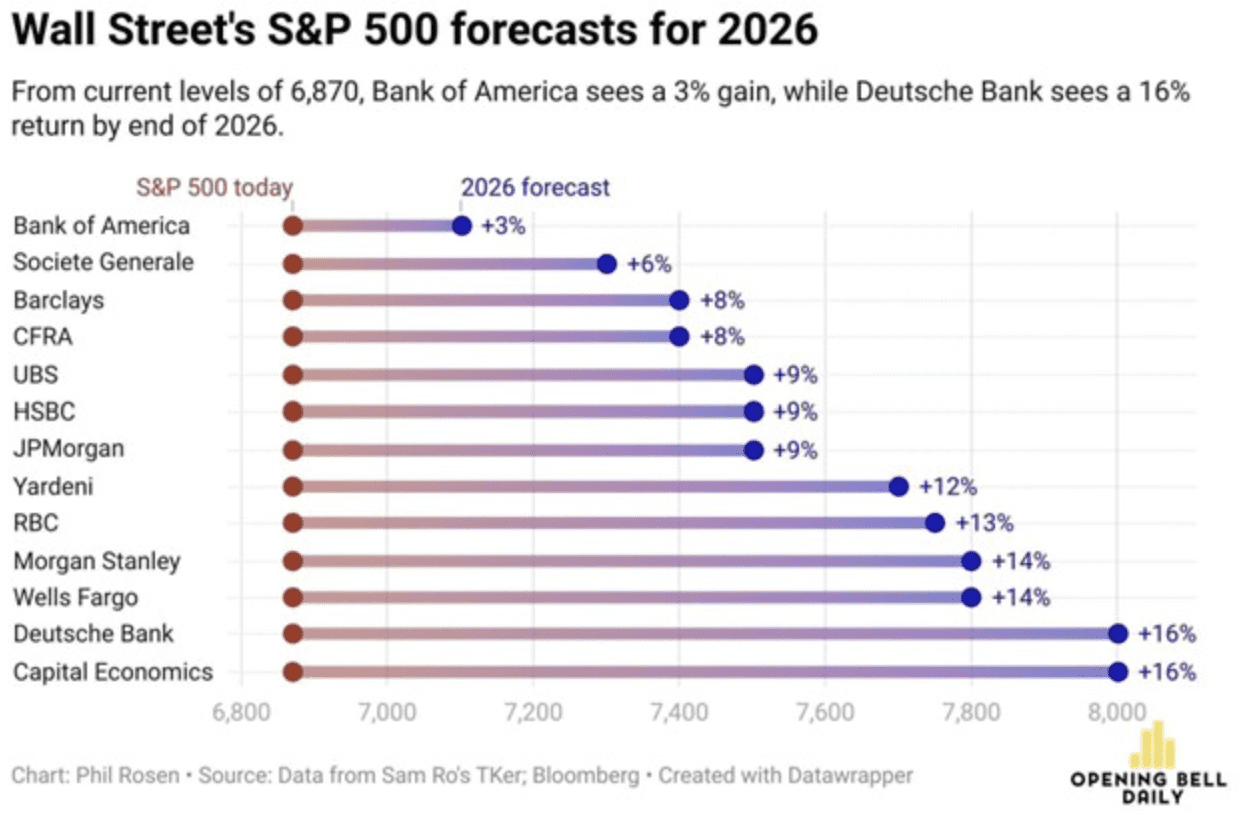
What’s notable isn’t just optimism—but how similar many of these forecasts appear. When expectations are broadly aligned, much of that optimism is often already reflected in current prices.
A Closer Look: Market Concentration Risk
Another defining characteristic of today’s market is concentration, where a relatively small group of very large companies accounts for a significant share of overall market returns.
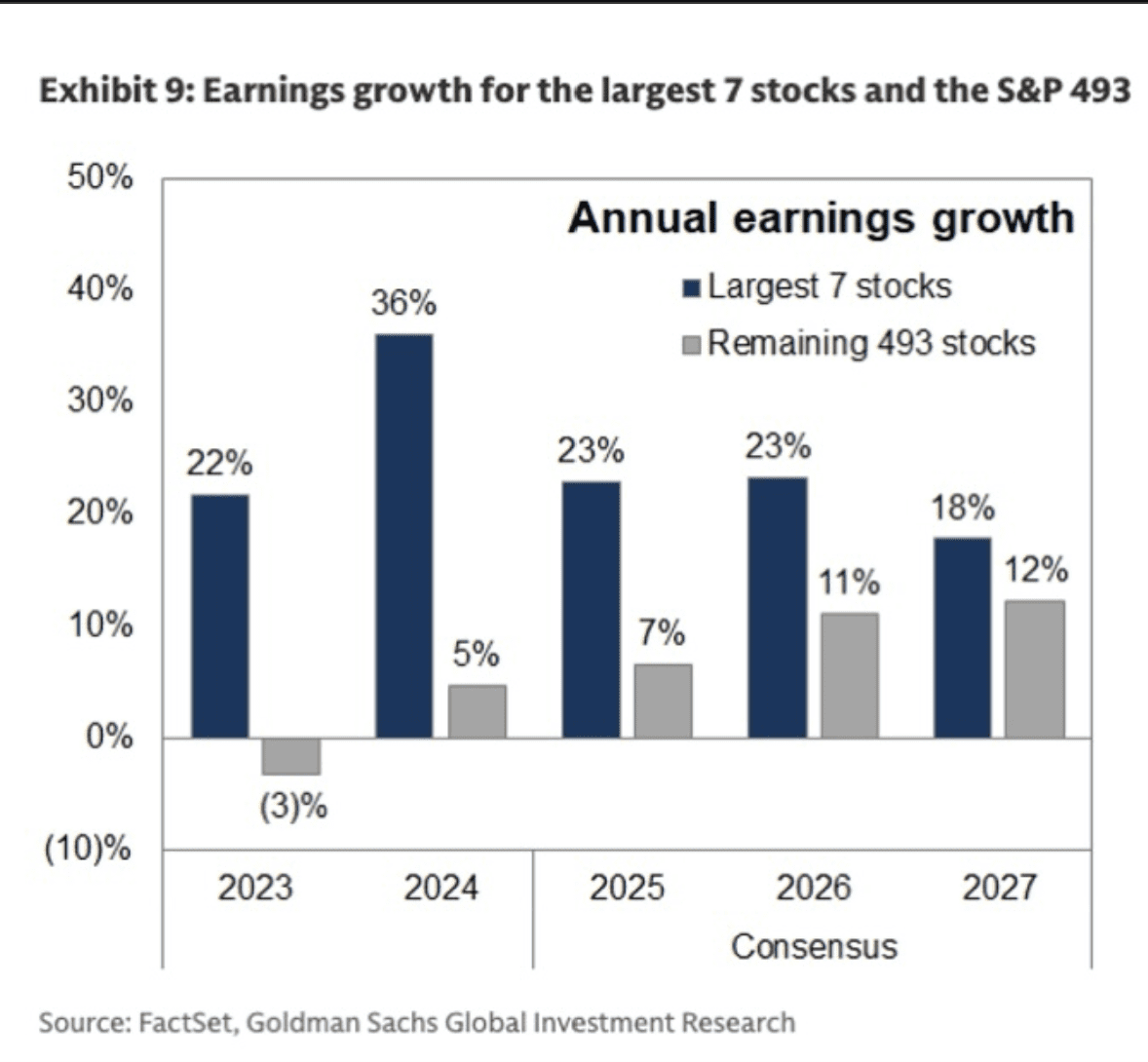
While these companies have performed well and earned their leadership positions, higher concentration can make markets more sensitive to leadership changes. This can contribute to sharper swings—both up and down—and reinforces the importance of diversification beneath headline index performance.
A Longer‑Term Trend: The Decline of Full‑Time Employment
Beyond markets, a longer‑term economic trend worth watching is the decline in full‑time employment as a percentage of the overall workforce.
As more workers move into part‑time, contract, or flexible roles, income stability and spending patterns can become less predictable. Over time, this may result in steadier—but potentially slower—economic growth, with implications for corporate earnings and market expectations.
A Note on Precious Metals Prices
Over the past year, precious metals prices—particularly gold and silver—have risen sharply. While such moves sometimes spark concern, higher precious metals prices alone are not a reliable signal of economic collapse.
Recent price increases appear driven more by supply‑and‑demand imbalances and a rise in margin‑based trading activity, which can amplify short‑term price movements without reflecting broad economic stress.
An Ongoing Cost Pressure: Health Insurance
Health insurance costs remain a continuing pressure on household budgets. Two structural features of the Affordable Care Act help explain this trend: subsidies reduce price sensitivity by introducing a third‑party payer, and combined risk pools raise average claims costs, contributing to higher premiums over time. Recent legislation has expanded access to Health Savings Accounts, allowing many individuals beginning in 2026 to contribute to HSAs even if they are not enrolled in traditional high‑deductible plans. While premiums may not immediately decline, broader HSA access could gradually influence how healthcare costs are planned for and paid.
Home Affordability Pressures
Home affordability remains challenging in many parts of the country. Two long‑term forces have played an important role: years of artificially suppressed mortgage interest rates, which boosted purchasing power and pushed prices higher, and large‑scale purchases of single‑family homes by institutional investors for rental use, which reduced available supply in some markets.
More recently, the Trump administration announced actions aimed at limiting the role of large institutional investors in single‑family rental markets, including efforts to restrict government‑backed financing for investor purchases and prioritize owner‑occupant buyers. While the long‑term impact remains uncertain, these steps reflect growing recognition that institutional ownership can influence housing availability and affordability at the local level.
The Federal Reserve Outlook for 2026
Monetary policy is entering a transitional period. Federal Reserve Chair Jerome Powell’s term is scheduled to end in May 2026, and President Trump is expected to name a successor. At the same time, the Federal Reserve ended quantitative tightening and resumed net security purchases in December, signaling a shift toward a more accommodative liquidity environment.
Market‑based inflation expectations remain relatively contained. One‑year inflation pricing suggests investors expect inflation pressures to moderate, indicating that recent easing reflects stability efforts rather than inflationary stress.
The 2026 Midterm Election Outlook and Markets
The 2026 midterm elections represent another potential source of short‑term market volatility. Historically, midterm election years tend to be more volatile in the months leading up to November, but markets have often performed better once outcomes are known and policy uncertainty fades.
Over longer periods, economic fundamentals—not election results—have remained the primary driver of market returns.
Diverging Growth Paths: The U.S., Europe, and Global Capital Flows
Growth expectations continue to favor the United States over Europe in 2026, with forecasts pointing to approximately 2%–2.2% growth in the U.S., compared with around 1% in the European Union. Despite the U.S. dollar’s decline last year, European capital continues to flow into U.S. markets.
A key reason is technology leadership, especially in artificial intelligence. While Europe produces strong research, it remains significantly behind the U.S. and China in AI commercialization, scale, and infrastructure, reinforcing the U.S. as a preferred destination for global capital.
The AI Infrastructure Boom and Evolving Market Leadership
The AI theme entering 2026 is increasingly about infrastructure rather than speculation. Capital investment is flowing into data centers, semiconductors, energy, and cooling systems to support AI deployment at scale. Productivity gains are real, but uneven, rewarding firms that successfully integrate AI into operations.
At the same time, market leadership appears to be broadening. After several years of outsized tech performance, there are growing signs of interest in defensive and cash‑flow‑oriented sectors such as consumer staples, healthcare, utilities, and selected industrials—reflecting valuation discipline rather than a loss of confidence in technology.
Trade Policy Uncertainty: The Supreme Court and Tariffs
Another topic markets are watching closely is the awaited Supreme Court ruling on the administration’s tariff authority, which could clarify the legal framework surrounding recent and future trade actions. A ruling that upholds the current approach would likely reinforce policy continuity, allowing tariffs to remain a negotiated economic tool. Markets typically respond to clarity—regardless of direction—by reducing uncertainty premiums.
If the Court were to limit that authority, attention would likely shift to a “Plan B”, which could include targeted tariffs through alternative statutory channels, expanded use of trade negotiations, or sector‑specific measures. Either path could create short‑term volatility, particularly for globally exposed industries, but history suggests that markets tend to adjust quickly once policy boundaries become clearer.
Why Expectations and Structure Matter
Markets don’t move simply based on whether outcomes are “good” or “bad,” but on whether reality turns out better or worse than what is already expected, and how economic structures evolve over time.
What This Means for Investors
Rather than focusing on forecasts, we believe it’s more productive to focus on preparedness:
- Diversification beyond narrow market leadership
- Risk aligned with long‑term goals and life circumstances
- A clear plan for navigating volatility
Our Focus Heading Into 2026
As we move through 2026, our priorities remain consistent:
- Maintaining diversified, long‑term portfolios
- Avoiding reactionary decisions driven by headlines
- Anchoring investment choices to planning—not prediction
A Final Thought
Strong recent performance and optimistic expectations are worth acknowledging—and enjoying. At the same time, periods like this are often when perspective matters most.
Are we positioned to remain disciplined as markets, policy, technology, and global growth dynamics continue to evolve?
That remains our guiding focus for 2026 and beyond.
* Indices mentioned are unmanaged and cannot be invested into directly. The S&P 500 Index is a market-capitalization-weighted index of 500 leading publicly traded companies in the U.S. Forecasts and/or estimates provided herein are subject to change and may not actually come to pass. Information regarding expected market returns and market outlooks is based on the research, analysis and opinions of the named firms’ investment team. These conclusions are speculative in nature, may not come to pass and are not intended to predict the future performance.